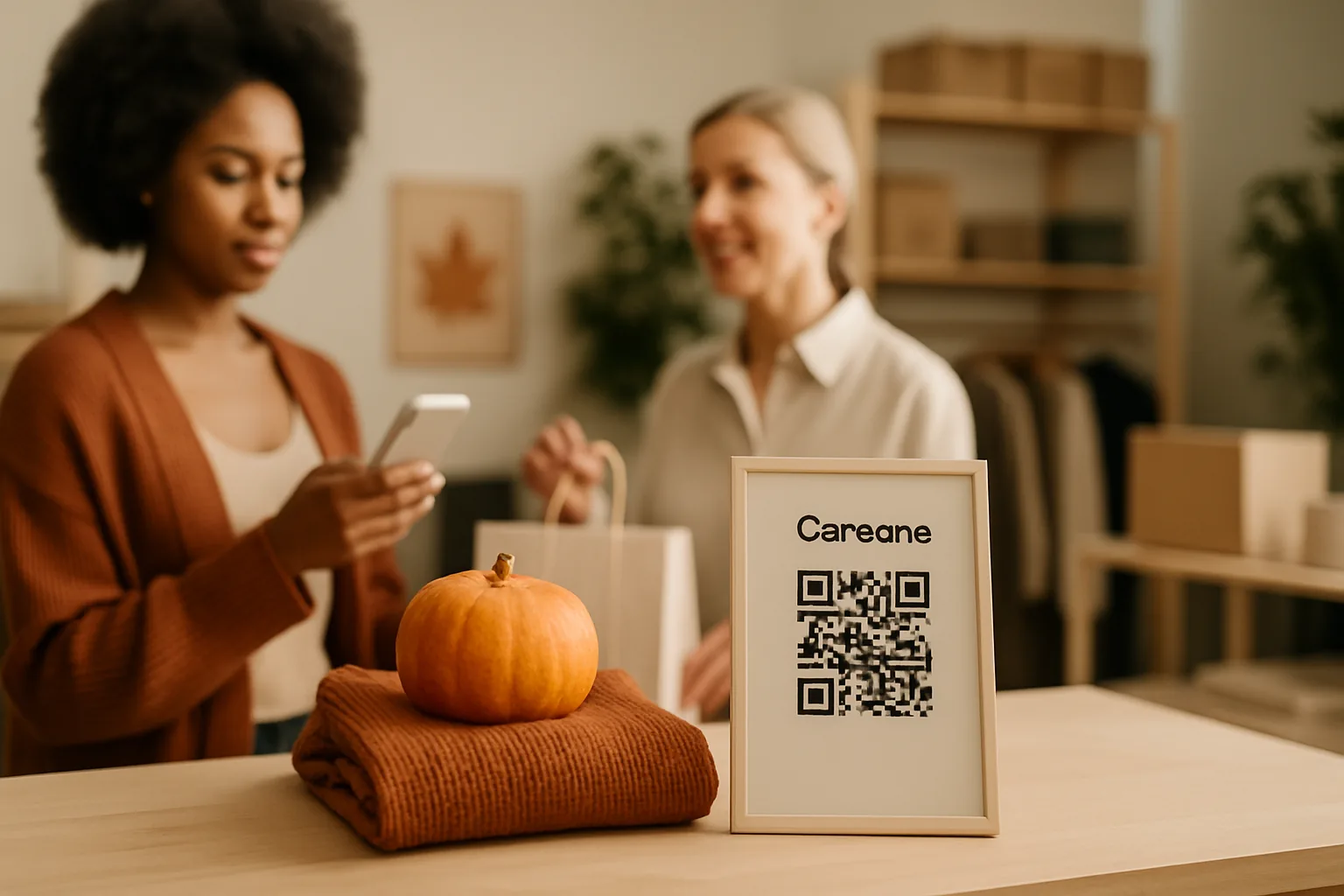
Autumn is one of the most underused windows in the seasonal marketing calendar. Most small businesses save their QR code energy for the holiday rush in November and December, missing a six-week stretch — late September through October — when foot traffic is rising, people are in a buying mood, and competitors are still quiet.
These seven tactics are designed specifically for fall. They assume you're running dynamic QR codes so you can update destinations without reprinting, and that you care about measuring what actually works.
1. Harvest-Themed "Scratch & Scan" Promotions
Print a single QR code on a card or receipt and rotate the destination daily or weekly — Monday might reveal a 10% discount, Wednesday a free add-on, Friday a gift-with-purchase. Dynamic QR routing lets you swap URLs on a schedule without touching the printed code. The mystery element drives repeat scanning, which you can track through your analytics dashboard.
2. Pumpkin Patch and Farm Stand Collab Codes
If you're a retailer or food brand, partner with a local farm or seasonal market. Place your QR code at their checkout pointing to a co-branded landing page — a recipe, a bundle deal, a loyalty sign-up. You capture their foot traffic; they offer their customers something extra. Print-run costs are negligible; the partnership does the distribution work.
3. "Warm-Up" Loyalty Reload Campaign
September is when seasonal loyalists come back from summer travel and re-engage with local businesses. Use a QR code on a window cling or tote bag to drive returning customers to reload a gift card balance, redeem dormant loyalty points, or register for a fall membership tier. This is a low-cost re-engagement tool that works especially well for cafés, bookshops, and fitness studios.
4. Fall Menu or Product Launch Reveal
Rather than a static product page, use a QR code to gate a "first look" landing page for your autumn menu or product line. Send an email teaser, put the code on your counter display, and let the page live for a fixed window — say, two weeks. After launch, update the destination to a regular product page. You get urgency without printing new materials.
5. Spooky Season Event Check-In
Halloween-adjacent events (tastings, trunk-or-treat nights, costume contests) need check-in and waivers. A QR code on the entry sign sends attendees to a quick form — no clipboard, no paper jam. You collect first-party contact data with consent, which is far more valuable than a social media follower. Tie the form to your email list and you've built an autumn segment you can retarget before the holidays.
6. Autumn Color Palette for Your QR Design
Fall is one of the few seasons where warm, rich colors — deep oranges, burgundies, forest greens, warm tans — are actually on-brand and high-contrast enough to keep a QR code scannable. The key constraint: your dark module color must maintain at least a 3:1 contrast ratio against the background. Following the QR code color contrast rules keeps your seasonal design functional without sacrificing the aesthetic. Test scan it on three different phones before printing.
The table below shows safe autumn palette pairings:
| Foreground (modules) | Background | Contrast ratio (approx.) |
|---|---|---|
| Deep burgundy #6B1A1A | Warm cream #FFF8EE | 7.2:1 ✅ |
| Forest green #2D4A22 | Light tan #F5E6C8 | 6.8:1 ✅ |
| Chocolate brown #3E1C00 | Pale pumpkin #FFD9A0 | 5.1:1 ✅ |
| Burnt orange #C84B00 | White #FFFFFF | 3.4:1 ✅ |
| Muted gold #B8860B | Beige #F5F0E8 | 2.1:1 ❌ |
7. Pre-Holiday Wishlist Builder
October is the right moment to capture gift ideas before your customers are overwhelmed by Black Friday messaging. A QR code on packaging, bag stuffers, or receipts links to a simple wishlist tool or gift guide landing page. Pair it with a sign-up incentive ("Save your list, get early access") and you build a segmented email list of buyers — not browsers — before the holiday sprint begins.
If you're thinking about the mechanics behind how QR codes can serve different destinations at different times, the static vs dynamic QR codes breakdown explains exactly why dynamic codes are worth the subscription cost for any campaign that runs longer than a week.
Measuring Your Fall Campaign
Don't wait until November to review results. Set a mid-campaign checkpoint — around Canadian Thanksgiving (second Monday of October) for North American businesses — to check:
- Scan volume by placement (window vs. receipt vs. partner location)
- Conversion rate on the landing page (scans ÷ form completions or purchases)
- Time-of-day scan distribution (tells you when customers are most receptive)
- Device split (iOS vs Android affects how landing pages render)
You can pull all of this from the analytics panel on our Super QR Code Generator or from UTM parameters if you're routing through Google Analytics.
Key Takeaways
- The six-week window before the holiday rush is underused — fall campaigns face less ad noise and often convert better.
- Dynamic QR codes let you change destinations, run time-based offers, and reuse printed materials across multiple autumn activations.
- Autumn color palettes work for branded QR codes only if you verify contrast ratios before printing — warm tones can fool the eye.
- Partner placements (farm stands, seasonal markets) are an efficient way to reach warm audiences without paid media spend.
- Build your email list in October through event check-ins and wishlist campaigns so you enter November with a primed audience.