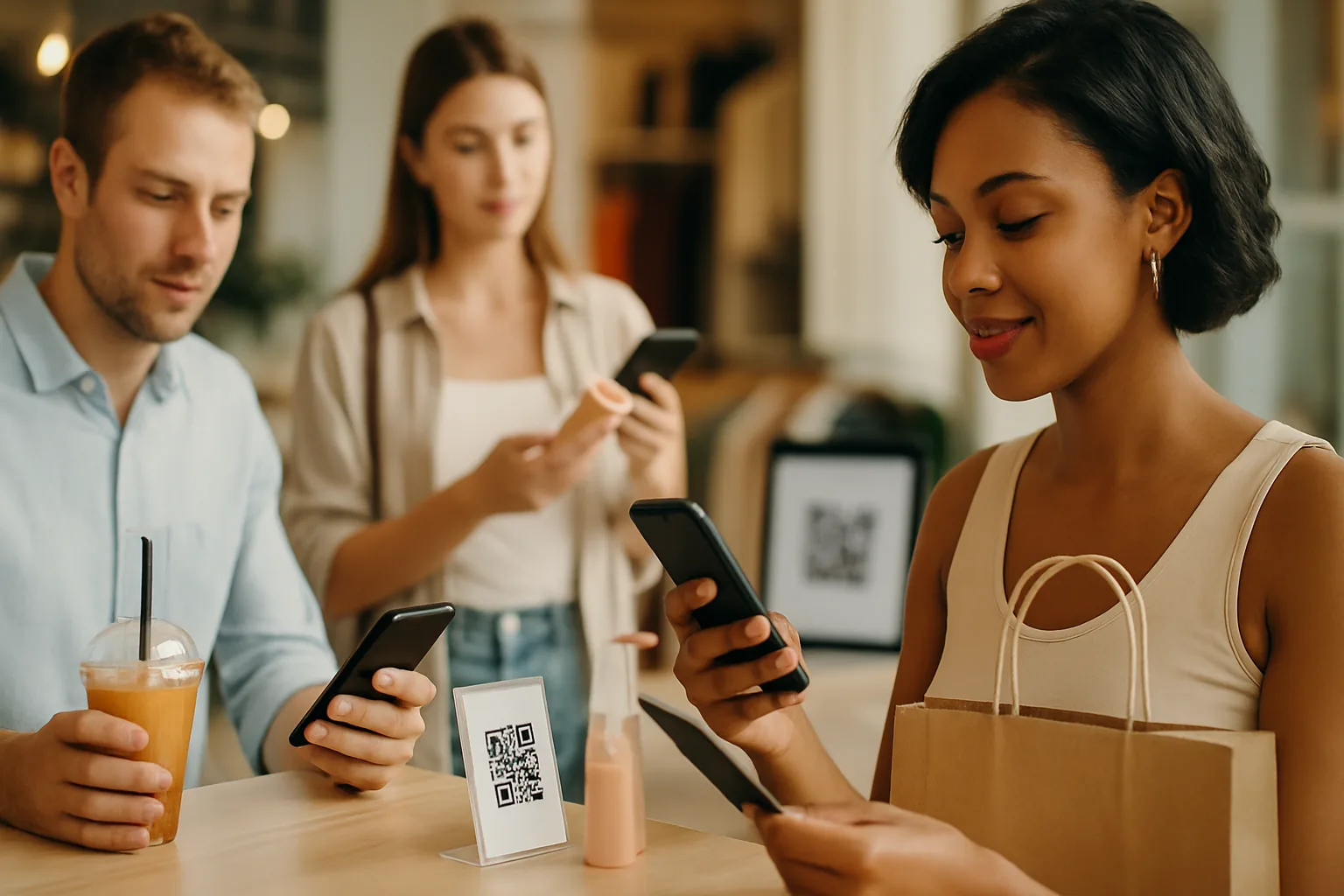
Summer creates a specific set of conditions that make QR code campaigns work differently than they do in other seasons: more foot traffic, outdoor venues, events with short attention spans, and customers who are in a "treat yourself" mindset. The tactics that drove results at a winter pop-up or a spring farmers market don't map cleanly onto a beach-town shop, a summer festival booth, or a seasonal outdoor dining setup. Here's what actually works.
1. Weatherproof Your Physical Codes Before You Print
Outdoor placements destroy QR codes faster than most marketers expect. Direct sunlight fades inkjet prints within days. Humidity causes paper to buckle, distorting modules enough to cause scan failures. Before your campaign launches:
- Print on laminated card stock or use UV-resistant vinyl stickers.
- Avoid matte finishes in high-humidity environments — gloss holds up better.
- Mount codes vertically where possible to reduce water pooling.
- Bring a smartphone on launch day and test every placement angle, including from 18–24 inches in direct sunlight.
A code that scans perfectly indoors can fail under a bright July sky due to glare. Checking color contrast and module clarity before printing is the single cheapest way to prevent a dead campaign.
2. Run a "Scan to Spin" Instant-Win Promotion
Summer is prime time for gamified promotions because customers are relaxed and willing to engage. A scan-to-spin mechanic (QR code → landing page with a digital prize wheel) works especially well at festivals, outdoor markets, and retail storefronts during peak summer hours.
Keep the mechanics simple:
- One scan per device per day (enforce via cookie or phone number entry).
- Prizes should feel attainable: a free drink upgrade, 15% off, a branded tote, early event access.
- Avoid grand prizes that skew redemption costs unpredictably.
The QR code itself should point to a mobile-optimised landing page — not your homepage. If that page requires more than two taps to reach the prize wheel, drop-off will be high.
3. Use Dynamic Codes to Swap Content by Week
Summer campaigns often span 10–12 weeks, but the offer that works during Memorial Day weekend is stale by mid-August. Dynamic QR codes let you update the destination URL without reprinting — which is the reason they're worth the small subscription cost for any seasonal campaign lasting more than two weeks.
Practical examples of week-by-week destination swaps:
- Week 1–3: "Kick off summer" discount on a core product.
- Week 4–6: Promote a limited summer SKU or seasonal menu item.
- Week 7–9: Mid-summer bundle deal to maintain momentum.
- Week 10–12: "Last chance summer" clearance or loyalty reward.
One printed code. Twelve weeks of relevance.
4. Capture Email or SMS at Outdoor Events
Events are the highest-density scan opportunity of the summer, but most businesses waste the moment by pointing the QR code at a product page. Instead, route scanners to a lightweight mobile sign-up form with a specific incentive ("Scan to get 20% off your next visit — enter your email").
Design the form for one-thumb use:
- Single field (email or phone, not both).
- Auto-fill enabled.
- Confirmation in under three seconds.
Captured contacts from a single summer festival can drive revenue through the rest of Q3 if you email them within 48 hours while the experience is still fresh.
5. Pair QR Codes With Summer-Specific CTAs on Your Frame
Generic "Scan Me" frames are background noise. Summer gives you a palette of specific, action-oriented prompts that stop people mid-stride:
| Generic CTA | Summer-Specific Alternative |
|---|---|
| Scan Me | Scan for Today's Special |
| Learn More | Scan to Claim Your Free Sample |
| Visit Our Website | Scan for the Festival Deal |
| Get the App | Scan to Skip the Line |
The frame text should reflect the exact context of the placement — a table tent at a brewery patio needs different language than a poster at a surf school. Specificity improves scan rates because it reduces the mental friction of "but what do I get?"
6. Track Scans by Location to Identify Your Best Placements
If you're running codes across multiple summer placements — a storefront window, an event booth, a direct mail postcard, a sandwich board — generate a unique code for each location. This isn't just good hygiene; it lets you make concrete decisions about where to concentrate spend.
Use QR code analytics to compare scan volume, time-of-day patterns, and conversion rates by placement. You'll almost always find that one or two placements drive the majority of scans. Shift your physical marketing budget toward those in the second half of the season.
A useful side benefit: location-level data tells you whether a placement is failing because of poor foot traffic or poor scan rates. Low foot traffic = wrong venue. Low scan rate at high-traffic location = the code, CTA, or offer needs work.
A Note on Timing
Summer campaigns benefit from launching before the season feels underway. In practice, that means having codes live by the last week of May. Customers who discover your campaign early become repeat scanners. Those who discover it mid-July are still valuable, but the compounding effect of early adoption is real.
If you're building your first seasonal QR campaign and want help picking the right code type for your specific use case, the Super QR Code Generator offers both static and dynamic options with scan analytics built in.
Key Takeaways
- Weatherproof outdoor placements with laminated or vinyl-printed codes; test in direct sunlight before launch.
- Dynamic codes are worth the cost for any campaign lasting more than two weeks — swap destinations without reprinting.
- Route event scanners to a single-field sign-up form, not a product page; capture email or SMS while the experience is fresh.
- Tailor frame CTA text to the exact placement context — specificity drives scan rates.
- Use unique codes per location and track analytics to identify which placements are actually worth keeping.